Dessert Vanilla Sponge Cake
Highlighted under: Home Baking
I love making a good vanilla sponge cake! It's light, airy, and absolutely perfect for any occasion. While it may seem simple, the key to its remarkable texture lies in how you whip the eggs. The fluffiness is crucial! I often find that adding a hint of vanilla bean enhances the flavor, making it not just a dessert but a delightful treat that everyone enjoys. Whether served plain or adorned with frosting, this cake has a special place in my heart.
During my baking adventures, I experimented with various techniques to create the perfect vanilla sponge cake. I discovered that beating the eggs and sugar until light and fluffy before gently folding in the flour makes all the difference. This method traps air and aids in leavening, ensuring that my cake always rises beautifully.
One memorable moment was when I decided to add a splash of buttermilk to the batter. It gave the cake an irresistible moistness and a subtle tang that balanced the sweetness. Every bite was simply heavenly!
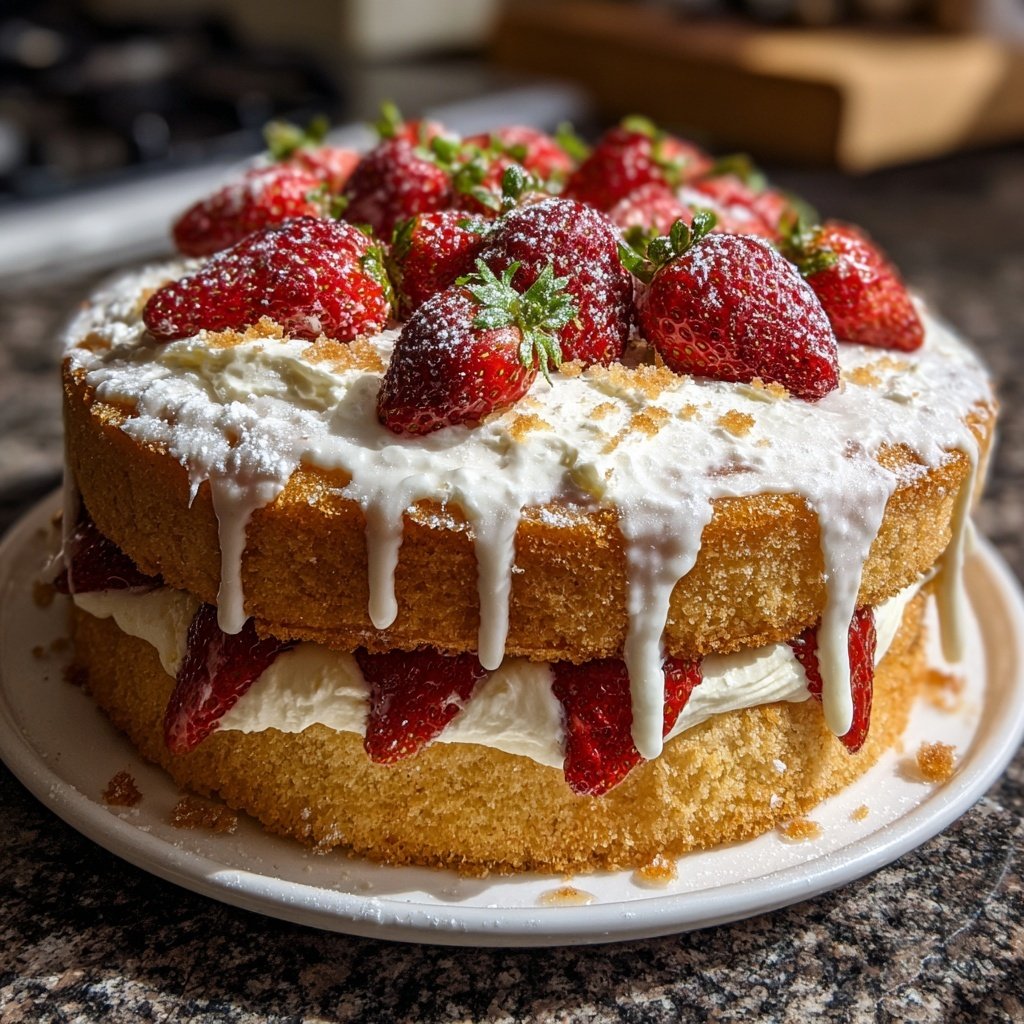
Why You'll Love This Recipe
- Light and airy texture that melts in your mouth
- Perfectly balanced vanilla flavor that enhances any filling
- Versatile base for various toppings and frostings
The Importance of Whipping Eggs
Whipping the eggs properly is crucial for achieving that light and airy texture characteristic of a vanilla sponge cake. You should whisk the eggs and sugar for 5 to 7 minutes until the mixture triples in volume and becomes pale. This aeration is what provides structure and helps the cake rise without using too much flour. If you skimp on this step, your cake may turn out dense and heavy, rather than fluffy and soft.
One key tip is to use room temperature eggs. They whip up better than cold eggs, allowing for more air incorporation. Additionally, if you're short on time, you can place the eggs in warm water for a few minutes before whipping them. This simple adjustment can make a big difference in your cake's final texture.
Ingredient Significance
Each ingredient in this vanilla sponge cake plays a vital role. The all-purpose flour provides structure, but you must be careful not to overmix after adding it to the eggs. Overmixing can develop the gluten too much, resulting in a tougher cake. To ensure success, combine the flour until just incorporated, leaving a few streaks of flour if necessary.
Using buttermilk adds moisture and a slight tang, enhancing the overall flavor of the cake. If you don’t have buttermilk on hand, a simple substitute is to mix one tablespoon of white vinegar or lemon juice with a cup of regular milk. Let it sit for about 5 minutes, and you’ll have an excellent buttermilk alternative for this recipe.
Ingredients
For the Cake
- 4 large eggs
- 1 cup granulated sugar
- 1 cup all-purpose flour
- 1 tsp baking powder
- 1/4 cup unsalted butter, melted
- 1 tsp vanilla extract
- 1/4 cup buttermilk
- Pinch of salt
Ensure all ingredients are at room temperature for best results.
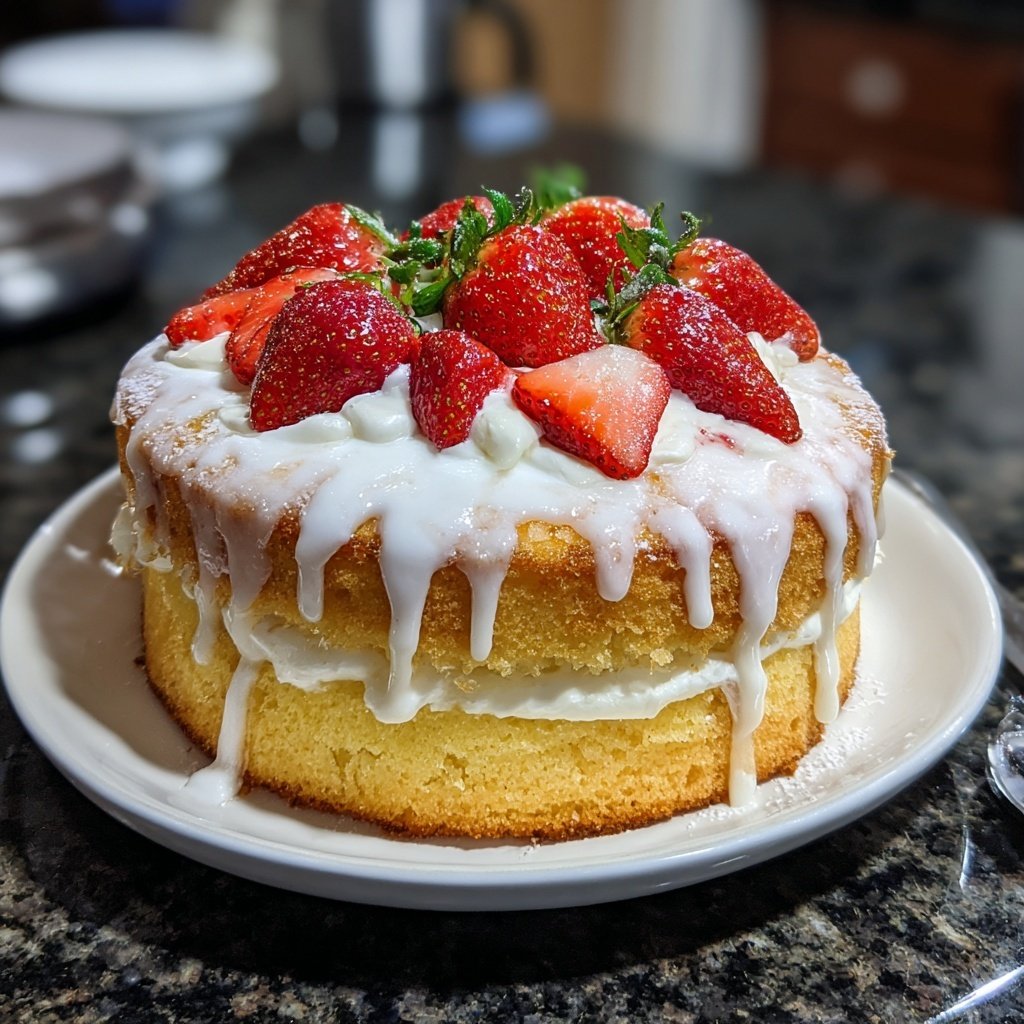
Instructions
Preheat the Oven
Preheat your oven to 350°F (175°C) and grease a 9-inch round cake pan with butter or cooking spray. Dust with flour.
Beat the Eggs and Sugar
In a large bowl, whisk together the eggs and sugar until thick and light in color, about 5–7 minutes.
Fold in Dry Ingredients
Sift together the flour, baking powder, and salt. Gently fold the dry ingredients into the egg mixture.
Add Wet Ingredients
Stir in the melted butter, vanilla extract, and buttermilk until just combined. Be careful not to overmix.
Bake the Cake
Pour the batter into the prepared pan and bake for 25 minutes or until a toothpick inserted in the center comes out clean.
Cool and Serve
Let the cake cool in the pan for 10 minutes, then transfer to a wire rack to cool completely before serving.
Serve with your favorite frosting or enjoy it plain!
Pro Tips
- To ensure the best rise, make sure all ingredients are at room temperature and avoid overmixing to keep the batter light and airy.
Troubleshooting Common Issues
If your cake sinks in the middle while cooling, it likely means you didn’t bake it long enough. An oven thermometer can help ensure your oven is at the correct temperature. Another potential issue could be overmixing; adding too much air can cause the cake to rise overly fast and collapse. Monitor your mixing closely, and refrain from vigorous stirring once combining the wet and dry ingredients.
Another common issue is overbaking, which can lead to a dry cake. Check for doneness a few minutes before the suggested baking time. Your cake is done when the edges are pulling away from the pan, and a toothpick inserted in the center comes out clean or with just a few moist crumbs.
Storing and Freezing Tips
Once your sponge cake has cooled completely, you can store it at room temperature. Wrap it in plastic wrap or place it in an airtight container to keep it fresh for up to 3 days. If you wish to keep it longer, consider freezing. Slice the cake into layers or individual pieces, wrap each piece tightly in plastic wrap, and then place it in a freezer-safe bag. It can be frozen for up to 3 months.
To thaw, simply place your cake in the refrigerator overnight. For a quicker option, you can let it sit at room temperature for about 30-60 minutes. Avoid thawing in the microwave, as this can change the texture. Once thawed, you can serve the cake plain or with your favorite frosting or whipping cream and fresh fruits.
Serving Suggestions
This vanilla sponge cake pairs well with a variety of toppings. For a classic approach, a simple buttercream or cream cheese frosting works wonderfully to elevate the dessert. You may also want to try a luscious chocolate ganache for a decadent twist. Adding fresh berries or fruit preserves can provide a refreshing element, along with a beautiful presentation.
For a fun variation, consider turning your sponge into a layered cake. Use this recipe to create multiple layers, alternating with fillings of pastry cream, whipped cream, or even flavored mousses. This can transform your vanilla sponge into a stunning centerpiece for special occasions or celebrations.
Questions About Recipes
→ Can I use a different flavor instead of vanilla?
Absolutely! You can substitute vanilla with almond extract or lemon zest for a different flavor.
→ How do I store the cake?
Store the cake in an airtight container at room temperature for up to 3 days, or refrigerate for longer freshness.
→ Can I freeze this cake?
Yes, this cake freezes well. Wrap it tightly in plastic wrap and then foil before freezing. Thaw before serving.
→ What can I serve with this cake?
This cake pairs well with fresh fruits, whipped cream, or a light glaze. It's also fantastic when layered with jam or cream!
Dessert Vanilla Sponge Cake
Created by: The Chefericcooks Team
Recipe Type: Home Baking
Skill Level: Intermediate
Final Quantity: 8 servings
What You'll Need
For the Cake
- 4 large eggs
- 1 cup granulated sugar
- 1 cup all-purpose flour
- 1 tsp baking powder
- 1/4 cup unsalted butter, melted
- 1 tsp vanilla extract
- 1/4 cup buttermilk
- Pinch of salt
How-To Steps
Preheat your oven to 350°F (175°C) and grease a 9-inch round cake pan with butter or cooking spray. Dust with flour.
In a large bowl, whisk together the eggs and sugar until thick and light in color, about 5–7 minutes.
Sift together the flour, baking powder, and salt. Gently fold the dry ingredients into the egg mixture.
Stir in the melted butter, vanilla extract, and buttermilk until just combined. Be careful not to overmix.
Pour the batter into the prepared pan and bake for 25 minutes or until a toothpick inserted in the center comes out clean.
Let the cake cool in the pan for 10 minutes, then transfer to a wire rack to cool completely before serving.
Extra Tips
- To ensure the best rise, make sure all ingredients are at room temperature and avoid overmixing to keep the batter light and airy.
Nutritional Breakdown (Per Serving)
- Calories: 300 kcal
- Total Fat: 10g
- Saturated Fat: 5g
- Cholesterol: 130mg
- Sodium: 180mg
- Total Carbohydrates: 45g
- Dietary Fiber: 1g
- Sugars: 22g
- Protein: 5g